Doretha Spriggs, Paul Gilbert, and Chrystal Gaskins. Doretha and Chrystal are cousins and descendants of the 500+ emancipated in 1791.skins, The three are standing in the cemetery where 103 graves were found.
George Washington and George Mason were from Fairfax County; Thomas Jefferson and Patrick Henry were from Virginia. But there was another local founder who was forgotten to time. On Aug. 1, 1791, just 8 years after the American Revolution ended, Robert Carter III began emancipating over 500 enslaved people, because he believed the words “all people are created equal,” and acted on them.
This story based in Fairfax County lay largely forgotten for over 200 years. While the founders of our democracy had revolutionary ideas, when Carter took the step of acting on them he was largely ostracized and excluded from history.
The descendants of those emancipated remembered what happened and kept the story alive from one generation to the next. But to the outside world, the largest emancipation prior to the Civil War was forgotten. That changed in 2022, when Paul McCray, a historian with NOVA Parks, began researching what had happened at Bull Run Regional Park in Centreville centuries ago. Eventually, the story unfolded as one lead led to another, and the picture expanded further when he connected with Chrystal Gaskins, a descendant of those emancipated by Carter and the keeper of the family history. The story of this site is now documented, and for the last five years the Fairfax NAACP and NOVA Parks have held Juneteenth celebrations at the site.
Carter was one of the richest people in America. As a youth he had been in a musical group with a young Thomas Jefferson, he knew Washington and Mason, and through marriage he was related to the Fairfax and Lee families. His name should be known at least as well as the others.
In 1775, he created the Baptist Meeting House in what is today Bull Run Regional Park. He encouraged everyone who worked for him, black and white, free and enslaved, to worship there. That church continued in operation until the 1820s, and while the wooden church is gone, those buried in the cemetery around the church are a key part of the evidence of what happened there. While the cemetery was mostly occupied by the enslaved, Carter buried his son in an unmarked grave in the same cemetery. Most of the graves there are unmarked because Carter believed in humility. He himself is buried in an unmarked grave at a different site.
By 1789, Carter wrote that he was hoping a law would be passed freeing the enslaved. When that didn’t happen, he wrote on Aug. 1, 1791, “I have for some time past been convinced that to retain them in Slavery is contrary to the true Principles of Religion and Justice, and that therefor it was my Duty to manumit [free] them.” With that he set about freeing over 500 people over a few years, starting with the oldest. In addition, he helped the emancipated start new lives. He leased and sold land to them and helped them set up businesses. The area around the church at Bull Run became a thriving freeman’s community. As the story was uncovered, NOVA Parks did ground penetrating radar and found 103 graves at this site, which speaks to the size of this community. “It has been so wonderful to see our family story lifted and shared with the world. I am grateful for all that NOVA Parks, and the Fairfax NAACP have done,” remarked Chrystal Gaskins.
Research on this site is ongoing, as are improvements like the online self-guided tour created this year by Girl Scout Camdyn Parker. The Religious Affairs Committee of the Fairfax NAACP have taken on the mission of promoting this site and story, and since Carter’s motivation was based on his religious beliefs, many faith groups of all kinds have toured the site and reflected on what it means to live by their beliefs.
As we mark the 250th anniversary of our experiment with democracy, let’s remember both the aspirational ideas of freedom and democracy, as well as the brave and bold actions of Robert Carter III and others in our history who have set the example for us to follow. This story of freedom and justice, based right here in Fairfax County, should be as well-known as any other from our founding.
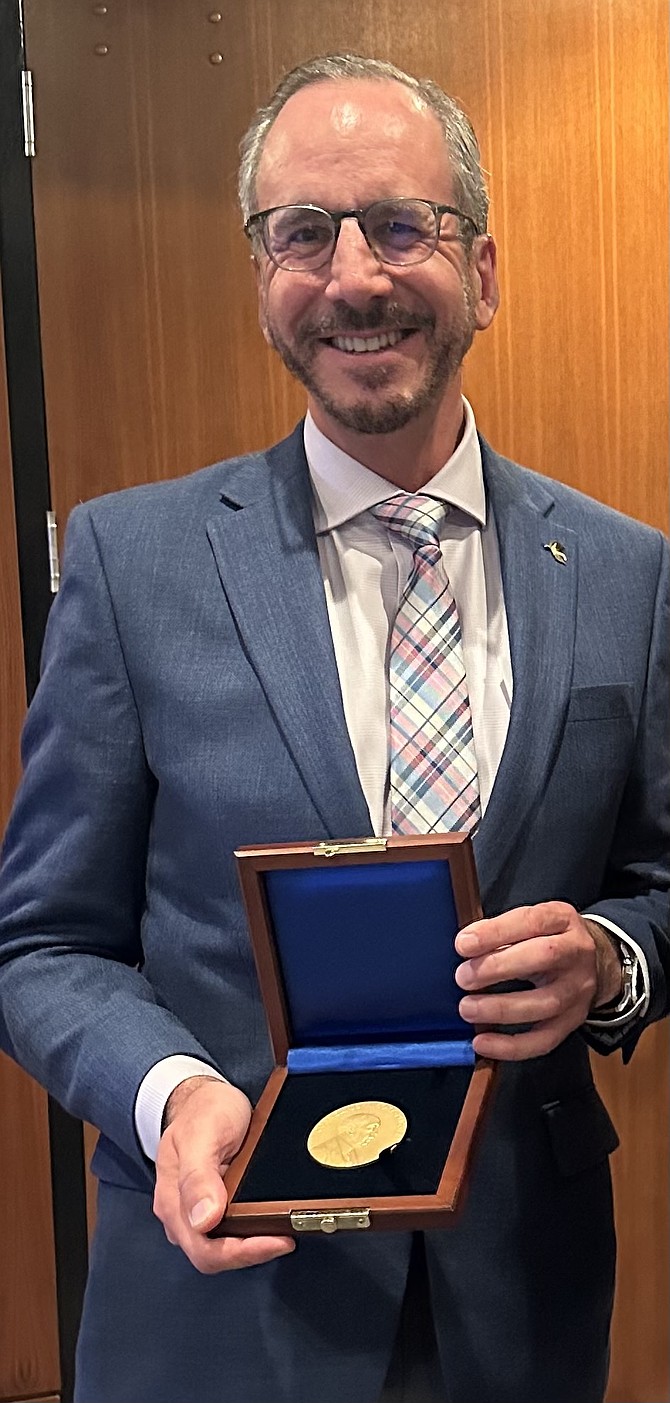
Paul Gilbert was the Executive Director of NOVA Parks from 2005 to 2025. In 2022 Gilbert received the Freedom Fund Award from the Fairfax Branch of the NAACP for his work to tell diverse history in the parks.